What is EUSPR
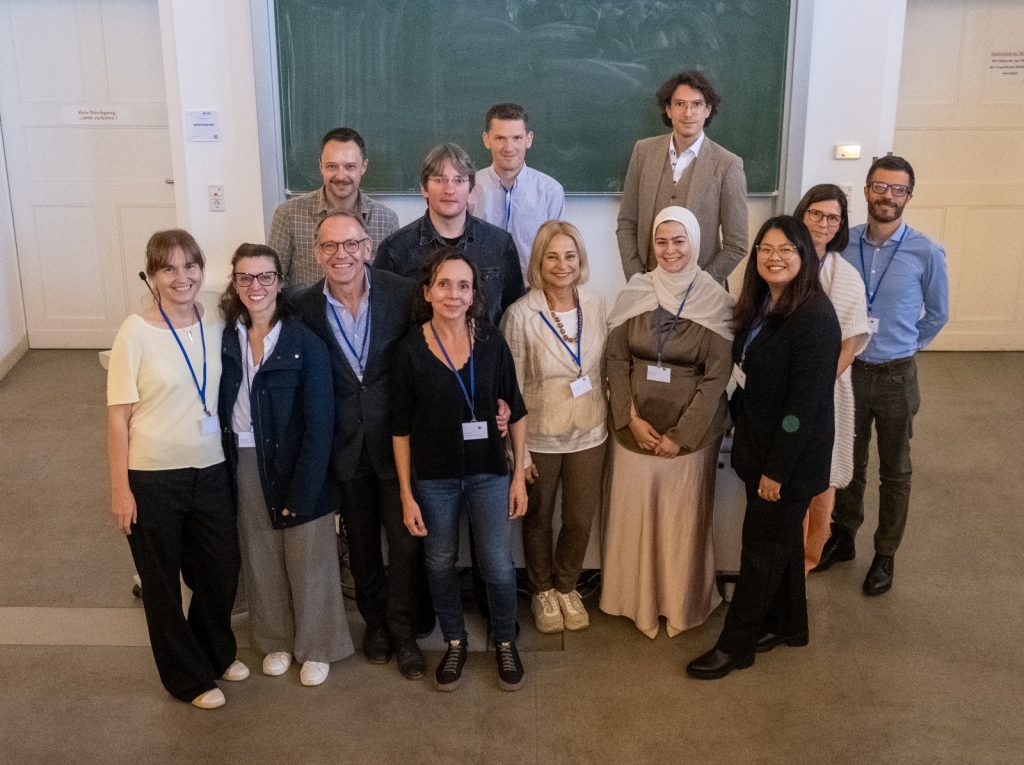
The European Society for Prevention Research (EUSPR) is a scientific society which was established in order to promote evidence-based prevention to tackle determinants of non-communicable disease and ill-health, which is not paralleled by investment in human resources and education.
Mission
To promote the inclusion of science-based principles of prevention in policies addressing non-communicable health issues, such as obesity, psychoactive substance use, violence, crime, mental and sexual health.
Why the EUSPR was established
In the European countries there is a growing interest for evidence-based prevention to tackle determinants of non-communicable disease and ill-health, which is not paralleled by investment in human resources, interventions and policies, training and education.
Consequently, this sector of research is not on the top agenda of most universities and institutions. Prevention scientists work in a rather isolated and mono-disciplinary world, while good quality research in this field requires cooperation and methodological development beyond the borders of traditional academic disciplines such as medicine, psychology, epidemiology, biostatistics, social scientists, anthropology.
There are no scientific societies in Europe that include these very specific themes. The EUSPR was born to fill this gap, and has since grown into an advisory body for national and European institutions such as the EMCDDA (now EUDA) and EUCPN to safeguard scientific caution, independence and prudence in the assessment of interventions, training contents and innovations.
Cornerstones of this advancement are:
- Cross-disciplinary networks of scientists;
- decision-, opinion- and policy makers and practitioners;
- methodology development;
- promotion of higher education and career development in prevention;
- implementation research;
- advocacy for evidence-based prevention
Events
Annual EUSPR conferences with specific topics and meeting with EUSPR members.
Membership of the Society
Membership in EUSPR is open to qualified professionals who work in the field of prevention: all European and international researchers, professionals, practitioners, policy makers and students who share the Society’s aims. We also encourage membership from all countries, particularly those professionals who wish to develop collaborative links with European researchers and decision-makers involved in prevention.
Current EUSPR membership benefits include:
- Inclusion in the only European-wide network of prevention researchers and other experts/
- Access to our Members’ Section webpage, where we share news and resources for EUSPR members only
- Reduced EUSPR Conference fees
- Full access to the Journal of Prevention
- Access to presentations from EUSPR Conferences
- Access to the EUSPR Early Careers Forum (ECF)
- Invitations to EUSPR meetings, workshops and summer schools
- Eligibility for election to the EUSPR Board (Regular members only)
- Subscription to the ECF Newsletter
- Participation in Technical Committees
- Participation in EUSPR activities (training, research projects, etc.)
- Networking
- Alerts about job opportunities
EUSPR Board of Directors (2025-2028)
The Board of Directors is the governing body of the Society. The Board are all volunteers and comprise:
President

Prof Elena Gervilla
Associate Professor, Faculty of Psychology, University of the Balearic Islands, Spain
Elena Gervilla is an Associate Professor and works at the Faculty of Psychology (Area of Methodology of Behavioural Sciences) at the University of the Balearic Islands (UIB, Spain). She is part of the Research Group in Data Analysis (UIB) and the group ‘Statistical and psychometric procedures applied in Health Sciences’ affiliated to the Institute for Health Research of the Balearic Islands (Idisba). Her research has been dedicated to projects centered on health promotion, prevention, and fostering healthy behaviors. Elena has actively collaborated in conducting thorough evaluations of interventions designed to enhance mental health outcomes, employing a combination of qualitative and quantitative methodologies for a comprehensive assessment.
President Elect

Dr Karin Streinmann
Researcher and Prevention Unit Lead, National Institute for Health Development, Estonia
Karin Streimann is a researcher and prevention unit lead at the Estonian National Institute for Health Development. She has a PhD in social work, and her research is related to the development, implementation and evaluation of preventive interventions. She supports the cross-sector development of a prevention system in Estonia, leads the Estonian Scientific Council on Prevention and is also a board member of the Estonian Centre of Excellence for Well-Being Sciences. She has been part of several European Commission-funded projects focusing on capacity building in the prevention field. In addition to her daily work, she teaches and supervises students from Tallinn and Tartu University.
Past President

Dr Gregor Burkhart, MD, MPH
Geneva, Switzerland
Gregor has for 28 years been responsible for prevention responses at the EUDA (previously EMCDDA) in Lisbon and has driven the development of databases on evidence-based interventions and policies (Xchange for Europe and EvidenciaViva for Latin America), prevention systems mapping and common European indicators on the implementation of prevention strategies and programmes in member states.
In 2015, Gregor was the initiator of the European Prevention Curriculum (EUPC) and has managed its implementation and quality in currently 32 countries in Europe and beyond with the aim to anchor evidence-based prevention within the daily practice of local decision-, opinion- and policy makers (DOPs).
Gregor was one of the founders of the EUSPR in 2010, and has never considered himself as a prevention expert or scientist but as a curious mediator between prevention science, practice and decision-making. None of his achievements above would have been possible without the networks and projects of the EUSPR
Secretary

Julia Borrell
Psychologist, Sant Pau Hospital Research Institute, Spain
Julia works as a psychologist at the Sant Pau Hospital Research Institute in the mental health research group. In her current role, she conducts clinical evaluations of patients with schizophrenia, manages data, and assists in preparing scientific material.
She gained hands-on experience in prevention science through a consultancy at the European Union Drugs Agency (EUDA). As part of her work, she coordinated training activities for the European Prevention Curriculum (EUPC), which allowed her to acquire a thorough understanding of the curriculum’s content. In addition, she assisted in updating the Xchange registry—the European evidence-based registry of prevention interventions.
Treasurer

Joella Anupol
Campus Prevention Officer, University of the Balearic Islands (UIB), Spain
Since 2017, Joella has been working in research, project and teams management across universities, NGOs, and in the private sector. She is currently working as a campus drug use prevention officer at UIB, coordinating a project funded by the Local Plan on Drugs of the Balearic Islands Government (PADIB). Her role involves implementing a short training course on prevention for 1st year university students and supporting the university’s on-campus prevention initiatives.
She has worked as EUSPR Office from 2018-2020 and from 2024-2025, overseeing the day-to-day administrative operations of the EUSPR, assisting with conference planning, and supporting the Board of Directors.
Lead of the EUSPR Early Careers Forum

Layan Amouri
PhD student, Lund University, Sweden
A professional social worker with a master’s in social work, Layan’s work centers on psychosocial prevention and the promotion of adolescent well-being, particularly among newly arrived youth. Her doctoral research focuses on how immigrant cultural associations can contribute to preventive social work by supporting the integration, belonging, and identity development of young people and their families. She also explores how collaboration between social services and civil society can be facilitated to strengthen community-based preventive efforts and promote long-term social cohesion.
Layan’s background combines practical experience as a social worker with research assistant roles in psychology and social work. She has contributed to projects on the psychosocial adjustment and preventive support of newly arrived youth, integration processes, and global perspectives on migration and social work. Her research seeks to develop knowledge that supports inclusive, prevention-oriented practices within social work and community settings.
Board members at large

Dr Giovanni Aresi
Researcher at Università Cattolica del Sacro Cuore, Italy
Giovanni is a researcher and professor of Community Health Psychology at Università Cattolica del Sacro Cuore, Italy. His research focuses on young people’s healthy behaviours (from substance use to dietary patterns), with a primary emphasis on the adoption of a participatory approach in conducting research and intervention evaluation.
Board members at large

Dr Nick Axford
Associate Professor, University of Plymouth, UK
Nick is an Associate Professor of Health Services Research at the University of Plymouth, UK, and a Senior Associate of the Dartington Service Design Lab. He has worked in prevention and early intervention research for over 20 years, focusing on how to improve psychosocial outcomes for children and families in a range of subject areas (e.g. bullying, behaviour, social-emotional learning, maltreatment).
Board members at large

Boris Chapoton
Project Manager, Université de Lyon, Université Jean Monnet, Saint-Etienne, France
Boris is currently working as a project manager at Lyon University, Jean Monnet University, Saint-Etienne, France. Boris has been a member of EUSPR since 2015 and has been particularly active within the Early Careers Forum. Coming from a training background integrating Psychology and Public Health, he applies Marketing approaches to his main research interests that lie in the media’s influence on health-related behaviour.
Board members at large

Dr Rachele Donini
Head of the Prevention and Health Promotion, ASL2 Savonese, Italy
Since 2007, Rachele has been at the Head of the Prevention and Health Promotion Unit in the mental health and addiction Department of ASL 2 in Savona (Italy). She collaborates with the manager to run the addiction Department and her specific mission is planning and implementing drug prevention interventions with the main local, regional and national stakeholders. Part of her work is addressed to train teachers and students and to offer knowledge and expertise to public and private institutions about prevention planning and interventions. At the moment, Rachele is the Scientific Coordinator of the European project “ASAP-Training” aiming to disseminate and train European Master Trainers on the most updated and effective prevention science interventions.
Board members at large

Prof Zila Sanchez
Professor at the Universidade Federal de Sao Paulo, Brazil
Zila Sanchez is a Professor of Epidemiology at the Department of Preventive Medicine at the Federal University of São Paulo (Brazil). Her research focuses on the prevention of substance use among adolescents and related issues, with an emphasis on evaluating the effectiveness and implementation of evidence-based prevention programs in school, family, and community settings. She leads several funded projects as Principal Investigator, combining quantitative and qualitative approaches to understand how prevention initiatives operate in real-world contexts. Her work integrates advanced longitudinal statistical modeling with qualitative inquiry and mixed-methods designs to examine both outcomes and processes of implementation. Her research involves close collaboration with the state and federal governments in Brazil to inform and strengthen public prevention policies. She is currently the Editor-in-Chief of the Journal of Prevention, the official journal of the European Society for Prevention Research.
Board members at large
Dr Samuel Tomczyk
University Medicine Rostock, Germany
Director of the Institute of Medical Psychology and Medical Sociology
Prof. Samuel Tomczyk works at the University Medicine Rostock at the Department of Psychosocial Medicine with a background in clinical and health psychology. His work focuses on health across the lifespan and digital health and safety through a prevention science lens. He utilizes participatory research, systems mapping approaches and employs mixed methods research designs and promotes interdisciplinary team science and open science in his work. He is a Principal Investigator in the German Center for Child and Adolescent Health (DZKJ), partner site Greifswald/Rostock, and a member of the International Committee of the Society for Prevention Research.
He has previously served as lead of the Early Career Forum of the EUSPR and is currently the Scientific Lead for the EUSPR.
Advisor to the Board

Dr Ina Koning
Associate Professor, Vrije Universiteit, Amsterdam, Netherlands
Ina is an Associate Professor at Clinical Child and Family studies at Vrije Universiteit Amsterdam. She has made a significant contribution to research on youth risk behavior in interaction with the social context, applied to both substance addiction as well as behavioral addictions (social media use). She has made a significant contribution to research on parenting and the prevention of adolescent substance use and problematic online behaviour; including intervention development and translation, implementation, and evaluation. Currently she is PI of the evaluation of a community-based intervention targeting substance use and mental health in the Netherlands. She highly values the translation of her work to practice, and has a history of disseminating her work to utilize the knowledge gained in the most comprehensive way possible.
Advisor to the Board

Maximilian von Heyden
FINDER Akademie, Germany
For over a decade, Maximilian has dedicated his career to advancing prevention science through research, practice, and capacity building, with a significant focus on European Commission-funded projects. Within the UPC Adapt initiative, he worked on implementing prevention training curricula across European countries. Through Frontline Politeia, he contributed to bringing prevention science training to substance use and crime prevention practitioners across multiple EU member states. He has also collaborated with the European Commission on child sexual abuse prevention initiatives through projects such as RBYC-Adapt, in partnership with Johns Hopkins University and Charité Berlin’s Kein Täter werden program.
Additionally, through his position as a research associate at Charité’s Institute of Sexology and Sexual Medicine, he has focused on developing evidence-based health communication strategies and advocating for science-based prevention policies, particularly in the area of child protection.
Administrative support to the Board of Directors

Maria Blanes
EUSPR Office, European Society for Prevention Research (EUSPR)
Since September 2025, Maria as EUSPR Office oversees the day-to-day administrative operations of the EUSPR, assists with conference planning, and supports the Board of Directors.
Conference support to the Board of Directors
Victòria Romero
EUSPR Conference, European Society for Prevention Research (EUSPR)
Victòria is a psychologist with a master’s in General Health Psychology. Her doctoral research in Cognition and Society is supported by a Ministry-funded scholarship. Her work focuses on the relationship between sport, adolescence and addictive behaviors, with particular attention to sport as both a protective factor and potential risk context for adolescent mental health.
She has collaborated on different research projects related to addiction and sport in adolescent populations.